Katharine Meyer Graham Leaves Her Mark on the Washington Post
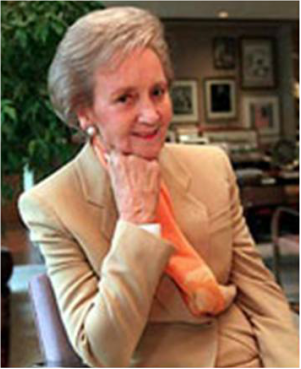
Agnes Meyer, the mother of Katharine Graham, shaped the Washington Post with her writing, and her daughter Katharine added her own imprint to the newspaper.
Katharine Graham, who her friends and associates called “Kay”, advanced from a Washington Post reporter to assuming control of the Washington Post in 1963, when her husband Philip committed suicide.
From 1969 to 1979, she was publisher of the Post, and from 1973 to 1991, she was board chairman and chief executive officer of the Washington Post Company. She remained Chairman of the Executive Committee until her death on July 17, 2001. She steered the Washington Post through its intricate coverage of the Pentagon Papers and the Watergate scandal and won a Pulitzer Prize for her autobiography, Personal History.
Katharine Meyer’s Mother was a Noted Journalist, Her Father a Noted Banker
Born on June 16, 1917, Katharine Meyer enjoyed a privileged childhood. Her father, Eugene Meyer, earned a fortune as a financier and later served as Chairman of the Federal Reserve Board under President Herbert Hoover and the first president of the World Bank when President Harry S. Truman was in office.
Her mother, Agnes Ernst Meyer, forged a career as a newspaper reporter when very few women worked in the profession Both of her parents traveled and socialized extensively, often leaving Katharine with nannies, governesses and tutors in their large home in Mount Kisco, New York or a smaller one in Washington, D.C.
While still in high school at the Madeira School, an independent private girl’s school near Washington DC, Katharine worked as a copy girl for The Washington Post which her father bought at a bankruptcy sale in 1933. She attended Vassar College for two years, and then transferred to the University of Chicago where she became interested in labor issues and developed friendships with people from all social classes
Katharine Meyer Marries Philip Graham
After she graduated from the University of Chicago in 1938, Katharine worked at the San Francisco News for almost a year and one of the stories she helped cover was a major wharf workers strike. In late 1939, she returned to Washington and joined the Washington Post staff, working in both the editorial and circulation departments.
Another Washington Post staff member introduced her to a group of young profession men who lived in a house in Arlington called Hockley Hall. One of the young men was Philip Leslie Graham, a recent Harvard Law School graduate who served as a law clerk for Supreme Court Justice Stanley Reed in 1939, and for Justice Felix Frankfurter, one of his former Harvard professors. Philip Graham and Katharine Meyer discussed life and politics at the Hockley group’s social gatherings and they fell in love.
Katharine and Philip were married on June 5, 1940, and moved into a two story row house on 37th Street NW. Eventually, the Grahams had one daughter, Lally Morris Graham Weymouth, and three sons, Donald Edward Graham, William Welsh Graham, and Stephen Meyer Graham.
Philip Graham is a Brilliant, but Troubled Husband
In 1946, Philip Graham became publisher of the Washington Post and when Eugene Meyer died in 1959, Philip Graham took over as Chairman of the Washington Post Company. Under Philip Graham's leadership, The Washington Post Company purchased television stations and Newsweek Magazine. While running the Washington Post, Philip Graham also played a behind the scenes role in politics. President Lyndon Baines Johnson credited Philip Graham with the outlines for the Great Society Program , and in 1960, Philip Graham helped persuade John F. Kennedy to include Johnson on his ticket as the vice presidential candidate.
At this point in his life, Philip Graham was already visibly suffering from the manic depression that would haunt him until he died. In 1957, he had a nervous breakdown and retired to the family farm in Marshall, Virginia, to recuperate. He returned to work, but endured periods when he functioned brilliantly and times when he was morose, erratic, and drank heavily. At that time, there were no mediciations to help moderate his moods and his illness.
Twice, Philip Graham was committed to Chestnut Lodge, a psychiatric hospital in Rockville, Maryland. Early in 1963, he left Katharine for a researcher from the Newsweek office in Paris, but in June 1963, he broke off the affair and returned home to enter Chestnut Lodge for the second time.
According to Katharine, Philip Graham was "quite noticeably much better," in August of 1963, and left the hospital for a weekend at their farmhouse. At the farmhouse on August 3, 1963, Philip killed himself with a shotgun. Katharine Graham found her 48-year-old husband in a downstairs bathroom.
Katharine Graham Takes Over The Washington Post After Her Husband's Death
After Philip Graham committed suicide, Katharine Graham took over the Washington Post Company at a time when most women were masters of their households but their responsibilities did not translate into the business world. Within days after her husband’s death, Katharine told the board of directors at The Post Company that it would stay in the family.
On September 20, 1963, she assumed the presidency of the company. At the time Katharine Graham was the only woman in a position of power at a publishing company, and many of her male colleagues and employees were skeptical of her ability to handle her position. Later in her memoir, Personal Life, Graham discussed her lack of confidence and faith in her own knowledge. “What I essentially did was to put one foot in front of the other, shut my eyes and step off the ledge. The surprise was that I landed on my feet,” she later said.
The Washington Post Investigates The Pentagon Papers and Watergate
Katharine Graham’s assumption of power at the Post and the strong and surging woman’s movement of the time changed her attitude and compelled her to promote gender equality in her own company. She and Ben Bradlee, managing editor of the Washington Post, raised the standards for investigative journalism to unimagined heights. In 1971, the Post began to publish parts of what were eventually called the Pentagon Papers, which contained supposedly secret information about the United States role in Vietnam since the end of World War II. The United States government tried to stop both the Washington Post and the New York Times from publishing the Pentagon Papers, but when the Supreme Court heard the cause, it ruled in favor of the newspapers.
In 1972, Katharine supported the aggressive investigative reporting of Carl Bernstein and Bob Woodward when the Washington Post chronicled the story of the Watergate burglary, which eventually forced the resignation of President Richard M. Nixon. The Washington Post won a Pulitzer Prize for Public Service for its Watergate reporting.
By the time Katharine Graham stepped down as chief executive of the Washington Post in 1991, and as chairman in 1993, the Post Company had expanded into a diversified media corporation with newspaper, magazine, television, cable and educational services businesses. She was the first women to head a Fortune 500 company and the first woman to serve as director of the Associated Press and of the American Newspaper Publishers Association.
Katharine Graham's Personal History Wins a Pulitzer Prize
In 1997, Katharine published her memoirs, entitled Personal History, which garnered praise for her honest portrayal of her husband's mental illness and the insights she provided about the changing roles of women over her life time. Personal History won the Pulitzer Prize in 1998.
While Katharine Graham visited Sun Valley, Idaho in 2001, she fell and died three days later on July 17, 2001, as a result her head injury. Her funeral was held at the Washington National Cathedral and she is buried in Oak Hill Cemetery, across from her former home in Georgetown.
Katharine Graham grew from a wife who felt that her sole purpose in life was to care for her husband into a woman of power and influence in the publishing world. She learned that as she put it, “The thing women must do to rise to power is to redefine their femininity. Once, power, was considered a masculine attribute. In fact, power has no sex.”
References
Bradlee, Ben, A Good Life: Newspapering and Other Adventures, Simon & Schuster, 1996
Felsenthal, Carol, Power, Privilege and the Post: The Katharine Graham Story, Seven Stories Press, 2003
Gerber, Robin, Katharine Graham: The Leadership Journey of an American Icon, Portfolio Hardcover, 2005
Graham, Katharine, Personal History, Vintage, Reprint Edition, 1998
Graham, Katharine, Katharine Graham’s Washington, Vintage, 2003
Katharine Graham, who her friends and associates called “Kay”, advanced from a Washington Post reporter to assuming control of the Washington Post in 1963, when her husband Philip committed suicide.
From 1969 to 1979, she was publisher of the Post, and from 1973 to 1991, she was board chairman and chief executive officer of the Washington Post Company. She remained Chairman of the Executive Committee until her death on July 17, 2001. She steered the Washington Post through its intricate coverage of the Pentagon Papers and the Watergate scandal and won a Pulitzer Prize for her autobiography, Personal History.
Katharine Meyer’s Mother was a Noted Journalist, Her Father a Noted Banker
Born on June 16, 1917, Katharine Meyer enjoyed a privileged childhood. Her father, Eugene Meyer, earned a fortune as a financier and later served as Chairman of the Federal Reserve Board under President Herbert Hoover and the first president of the World Bank when President Harry S. Truman was in office.
Her mother, Agnes Ernst Meyer, forged a career as a newspaper reporter when very few women worked in the profession Both of her parents traveled and socialized extensively, often leaving Katharine with nannies, governesses and tutors in their large home in Mount Kisco, New York or a smaller one in Washington, D.C.
While still in high school at the Madeira School, an independent private girl’s school near Washington DC, Katharine worked as a copy girl for The Washington Post which her father bought at a bankruptcy sale in 1933. She attended Vassar College for two years, and then transferred to the University of Chicago where she became interested in labor issues and developed friendships with people from all social classes
Katharine Meyer Marries Philip Graham
After she graduated from the University of Chicago in 1938, Katharine worked at the San Francisco News for almost a year and one of the stories she helped cover was a major wharf workers strike. In late 1939, she returned to Washington and joined the Washington Post staff, working in both the editorial and circulation departments.
Another Washington Post staff member introduced her to a group of young profession men who lived in a house in Arlington called Hockley Hall. One of the young men was Philip Leslie Graham, a recent Harvard Law School graduate who served as a law clerk for Supreme Court Justice Stanley Reed in 1939, and for Justice Felix Frankfurter, one of his former Harvard professors. Philip Graham and Katharine Meyer discussed life and politics at the Hockley group’s social gatherings and they fell in love.
Katharine and Philip were married on June 5, 1940, and moved into a two story row house on 37th Street NW. Eventually, the Grahams had one daughter, Lally Morris Graham Weymouth, and three sons, Donald Edward Graham, William Welsh Graham, and Stephen Meyer Graham.
Philip Graham is a Brilliant, but Troubled Husband
In 1946, Philip Graham became publisher of the Washington Post and when Eugene Meyer died in 1959, Philip Graham took over as Chairman of the Washington Post Company. Under Philip Graham's leadership, The Washington Post Company purchased television stations and Newsweek Magazine. While running the Washington Post, Philip Graham also played a behind the scenes role in politics. President Lyndon Baines Johnson credited Philip Graham with the outlines for the Great Society Program , and in 1960, Philip Graham helped persuade John F. Kennedy to include Johnson on his ticket as the vice presidential candidate.
At this point in his life, Philip Graham was already visibly suffering from the manic depression that would haunt him until he died. In 1957, he had a nervous breakdown and retired to the family farm in Marshall, Virginia, to recuperate. He returned to work, but endured periods when he functioned brilliantly and times when he was morose, erratic, and drank heavily. At that time, there were no mediciations to help moderate his moods and his illness.
Twice, Philip Graham was committed to Chestnut Lodge, a psychiatric hospital in Rockville, Maryland. Early in 1963, he left Katharine for a researcher from the Newsweek office in Paris, but in June 1963, he broke off the affair and returned home to enter Chestnut Lodge for the second time.
According to Katharine, Philip Graham was "quite noticeably much better," in August of 1963, and left the hospital for a weekend at their farmhouse. At the farmhouse on August 3, 1963, Philip killed himself with a shotgun. Katharine Graham found her 48-year-old husband in a downstairs bathroom.
Katharine Graham Takes Over The Washington Post After Her Husband's Death
After Philip Graham committed suicide, Katharine Graham took over the Washington Post Company at a time when most women were masters of their households but their responsibilities did not translate into the business world. Within days after her husband’s death, Katharine told the board of directors at The Post Company that it would stay in the family.
On September 20, 1963, she assumed the presidency of the company. At the time Katharine Graham was the only woman in a position of power at a publishing company, and many of her male colleagues and employees were skeptical of her ability to handle her position. Later in her memoir, Personal Life, Graham discussed her lack of confidence and faith in her own knowledge. “What I essentially did was to put one foot in front of the other, shut my eyes and step off the ledge. The surprise was that I landed on my feet,” she later said.
The Washington Post Investigates The Pentagon Papers and Watergate
Katharine Graham’s assumption of power at the Post and the strong and surging woman’s movement of the time changed her attitude and compelled her to promote gender equality in her own company. She and Ben Bradlee, managing editor of the Washington Post, raised the standards for investigative journalism to unimagined heights. In 1971, the Post began to publish parts of what were eventually called the Pentagon Papers, which contained supposedly secret information about the United States role in Vietnam since the end of World War II. The United States government tried to stop both the Washington Post and the New York Times from publishing the Pentagon Papers, but when the Supreme Court heard the cause, it ruled in favor of the newspapers.
In 1972, Katharine supported the aggressive investigative reporting of Carl Bernstein and Bob Woodward when the Washington Post chronicled the story of the Watergate burglary, which eventually forced the resignation of President Richard M. Nixon. The Washington Post won a Pulitzer Prize for Public Service for its Watergate reporting.
By the time Katharine Graham stepped down as chief executive of the Washington Post in 1991, and as chairman in 1993, the Post Company had expanded into a diversified media corporation with newspaper, magazine, television, cable and educational services businesses. She was the first women to head a Fortune 500 company and the first woman to serve as director of the Associated Press and of the American Newspaper Publishers Association.
Katharine Graham's Personal History Wins a Pulitzer Prize
In 1997, Katharine published her memoirs, entitled Personal History, which garnered praise for her honest portrayal of her husband's mental illness and the insights she provided about the changing roles of women over her life time. Personal History won the Pulitzer Prize in 1998.
While Katharine Graham visited Sun Valley, Idaho in 2001, she fell and died three days later on July 17, 2001, as a result her head injury. Her funeral was held at the Washington National Cathedral and she is buried in Oak Hill Cemetery, across from her former home in Georgetown.
Katharine Graham grew from a wife who felt that her sole purpose in life was to care for her husband into a woman of power and influence in the publishing world. She learned that as she put it, “The thing women must do to rise to power is to redefine their femininity. Once, power, was considered a masculine attribute. In fact, power has no sex.”
References
Bradlee, Ben, A Good Life: Newspapering and Other Adventures, Simon & Schuster, 1996
Felsenthal, Carol, Power, Privilege and the Post: The Katharine Graham Story, Seven Stories Press, 2003
Gerber, Robin, Katharine Graham: The Leadership Journey of an American Icon, Portfolio Hardcover, 2005
Graham, Katharine, Personal History, Vintage, Reprint Edition, 1998
Graham, Katharine, Katharine Graham’s Washington, Vintage, 2003
