Mary Breckinridge, Circuit Riding Nurse and Founder of the Frontier Nursing Service
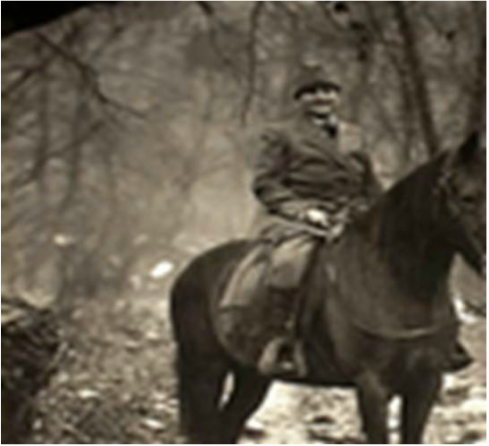
For forty years, Mary Breckinridge, founder of the Frontier Nursing Service, rode the Kentucky hills on horseback to deliver babies and medical care to rural people.
Mary Breckinridge was born into a privileged family in Memphis, Tennessee in 1881, but she lived and died in modest circumstances in rural Kentucky. In 1891, Mary's father, Clifton Breckinridge, a former Confederate midshipman, was appointed American Minister to St. Petersburg. He took his family to Russia with him and Mary and her sister Lee had a German and French governess and mastered both languages.
Mary Visits a Russian Foundling Asylum
The Breckinridge family attended the coronation of Czar Nicholas II in Moscow in 1896, but Mary was more impressed by a visit to the foundling asylum with her mother than the coronation ceremonies. There were about 300 babies at the asylum that had either been picked up from the street or left at the asylum door. For the first time in her life, Mary realized that all children were not as lucky as she and her sister.
When she was 15, Mary went to school in the Swiss Alps. After her family returned to America, she attended a young ladies finishing school in Stamford, Connecticut until she turned eighteen. Her parents didn't approve of college for girls, so she didn't go to college. She married a brilliant young lawyer who died shortly after their marriage.
Tragedy and Nurses Training
Trying to piece her life back together after her husband's death, Mary went to North Carolina to stay with friends. One night they asked her to stay with a child that had typhoid fever and she realized that she couldn't relieve the child's suffering. She decided that if she studied nursing she could help others and perhaps ease her own grief.
From 1907 to 1910, Mary took a three year course at St. Luke's Hospital School of Nursing in New York. The southern belle who had spent her days horseback riding and her nights dancing now worked in the wards ten to eleven hours a day, assisted in the operating room, and attended classes and studied. In her last year of nursing school, she asked to be assigned to the infant's ward, because she wanted to learn more about the care of sick babies.
After she had passed the New York state nursing examinations, Mary remarried, and had a son and a daughter who both died. The marriage ended unhappily in divorce and these blows made Mary determined to devote the rest of her life to child care and helping people.
More Training and Riding Through the Kentucky Mountains
When the Armistice ended World War I, Europe teemed with hungry, ill, and displaced people. Mary volunteered to serve with the American Committee for Devastated France. In France, Mary nursed people and distributed food and clothing. While she served in France, Mary had time to think about her future. As soon as she returned to New York in the fall of 1922, she enrolled in Teachers College at Columbia University. She took courses in public health nursing, social sciences, nursing education, child psychology, and mental hygiene- now psychiatry.
Mary spent the summer of 1923 riding over the Kentucky mountains in the beautiful region of Leslie County, which included about 700 square miles of territory with three towns of two or three hundred population each. Altogether the region had only about 10,000 people. People in the Kentucky mountains had a hard time making a living. The men cultivated corn for their large families on
strips of rocky soil and raised livestock. In the winter they cut timber to be floated down the rivers on the tides of the spring rains. The money they received for the logs was usually the only cash they saw the year around. Children went barefoot all summer and frequently clumped around in their father's old shoes when the weather turned cold.
Every day Mary Breckinridge rode to visit the mountain people. Since blacksmiths were scarce, she carried extra horseshoes in her saddlebag. At night she slept in the crowded cabins of the hospitable mountaineers, sometimes sharing a bed with the entire family. She ate pork and cornbread with them at night, and pork and cornbread for breakfast.
In all of the vast region, there were no hospitals, no licensed physicians, and no nurses. Children were delivered by local midwives. Mary interviewed 53 of the midwives. The majority had started "cotching babies" as the Kentucky expression put it, after they had raised families of their own. They were well meaning but untrained. When they encountered hemorrhages or other complications, they resorted to magic or spells -such as saying holy words over the mother, or putting an ax, edge up, under the bed to cut pain and complications.
Midwife Training in England and Scotland
At the end of that summer of 1923, Mary said good-bye to the mountain families. By fall, she was in London where she had enrolled in the British Hospital for Mothers and Babies, as a pupil-midwife. She was already a trained nurse, so her course lasted only four months, during which she delivered 20 normal cases under hospital supervision and attended abnormal deliveries performed by a physician. She spent two years in England and Scotland and obtained a certificate in postgraduate midwifery as well.
Mary Breckinridge founds the frontier nursing services and acquires Henrietta
Mary Breckinridge installed two of the five bathtubs in Leslie County in her home at Wendover and she nursed the people of the Kentucky mountains for over forty years.
Mary Breckinridge had spent years training as a nurse and midwife so that she could train and supply nurse midwives for the Kentucky mountain people that she loved so well. By February 1925, Mary Breckinridge was once more in Leslie County, Kentucky, ready to launch her plan of supplying nurse midwives for the Kentucky mountain people. She persuaded prominent Kentucky citizens to lend her moral support and on May 28, 1925, the Kentucky Committee for Mothers and Babies held its first meeting at Frankfort, Kentucky. By 1928, the name had been changed to the Frontier Nursing Service. A branch committee was set up in a rickety two story building in the town of Hayden and the building also served temporarily as a clinic.
Mary Rides the Mountain Circuit Again
Again Mary Breckinridge rode through the mountains in the summer of 1928, visiting lonely cabins and riding up steep mountain canyons. She gave nursing care to men, women, and especially children. Word spread that she was a nurse and mothers flocked to her with their sick babies.
For the next 40 years, Mary Breckinridge served the Kentucky mountain people as a nurse, midwife and friend. She had seen and fallen in love with a stretch of land facing the great North Mountain, on the Middle Fork of the Kentucky River a few miles from Hyden. She bought the land and had a log cabin built there which she named Wendover. For many years, Wendover had two of the only five bathtubs in the county. She recruited nurse-midwives from England to come over and work with her.
Hyden Hospital and Outpost Nursing Centers
In June of 1928, she opened Hyden Hospital and Health Center. From 1927 to 1930, Mary and her staff opened six outpost nursing centers, nine to twelve miles apart - Beech Fork, Possum Bend, Red Bird, Flat Creek, Brutus, and Bowlington. They had a clinic and waiting room for patients and two nurse midwives were assigned to each outpost. With Hyden Hospital and Wendover, they meant nursing care within reasonable distance for all the 700 square miles of the Frontier Nursing Service territory.
Through the Depression of the 1930s and WWII, the Frontier Nursing Service changed with the Kentucky mountain people. In the late 1930s, highway Route 80 was completed through the Kentucky wilderness. Edsel Ford, of the Detroit Committee, presented the service with a reconditioned Model A Ford, which Mary and her workers named Henrietta. Seven years later, Ford replaced Henrietta with Henrietta II, a jeep.
During the war years, the nursing service suffered a severe shortage of two items -horseshoes and diapers. Representative Frances Bolton of Ohio managed to convince Congress that diapers were essential items and that in the Kentucky mountains horseshoes played a vital role in the delivery of babies.
Wendover Grows into a Community
Life did not always take place in a log cabin for Mary Breckinridge. Mrs. Eleanor Roosevelt, wife of President Franklin Delano Roosevelt., was the chief Washington sponsor of the Frontier Nursing Service. Several times Mary was invited to lunch at the White House, and once she attended an intimate family dinner with the president. As a young man, FDR had ridden through parts of the Kentucky mountains and had taken a sympathetic interest in her work.
Over the years, the Frontier Nursing Service became so much a part of the life of the region that people couldn't remember what life had been like without it. Wendover, which started with a log cabin and the Big House, grew to a sizable community with many buildings, a clinic and waiting room for the Wendover nurse midwives and administrative offices. Hyden Hospital, enlarged and expanded, still remained the only hospital in Frontier Nursing Service territory.
Mary's Memories and Memories of Mary
For Mary Breckinridge, her forty years in the service were a kaleidoscope of memories: She remembered the boy with a fishhook caught in his foot, lying stoically by the creek as she probed deep to extract it. She remembered women with sick babies in their arms waiting patiently at the door of her clinic and a thousand rides along mountain trails in the cold winter moonlight. She remembered flower blooming meadows in early spring and the brisk coolness of an autumn day carpeted by golden leaves. She remembered fording streams at dawn and searching for a pinpoint of cabin light in the swirling whiteness of a blizzard. She remembered the stark tragedy of a life that couldn't be saved and the joy of bringing a new life into the world.
In 1963, Mary Breckinridge became ill. Her surgeon sent her to the University of Kentucky Medical Center Hospital for cobalt radiation treatments after an operation. She felt no pain, nausea, or irritation of the skin. "It was all quite wonderful to an old nurse like me," she said.
Mary returned to work as soon as she could. -a gallant white-haired woman with an indomitable spirit. For two more years she continued her full time duties as Director of the Frontier Nursing Service. On the morning of May 15, 1965, she died quietly in her sleep. Her friends covered her casket with a blanket of ivy and mountain laurel, inter-woven with tiny yellow rosebuds gathered from the garden of Wendover. An endless stream of mountain people filed past to pay tribute to Mary Breckinridge, the woman who have given them the gift of herself.
References
Mary Breckinridge, Nursing Service and Rural Health in Appalachia, Melanie Beals Goan, The University of North Carolina Press, 2008
Wide Neighborhoods, A Story of the Frontier Nursing Service, Mary Breckinridge, The University Press of Kentucky, 1981.
Mary Breckinridge was born into a privileged family in Memphis, Tennessee in 1881, but she lived and died in modest circumstances in rural Kentucky. In 1891, Mary's father, Clifton Breckinridge, a former Confederate midshipman, was appointed American Minister to St. Petersburg. He took his family to Russia with him and Mary and her sister Lee had a German and French governess and mastered both languages.
Mary Visits a Russian Foundling Asylum
The Breckinridge family attended the coronation of Czar Nicholas II in Moscow in 1896, but Mary was more impressed by a visit to the foundling asylum with her mother than the coronation ceremonies. There were about 300 babies at the asylum that had either been picked up from the street or left at the asylum door. For the first time in her life, Mary realized that all children were not as lucky as she and her sister.
When she was 15, Mary went to school in the Swiss Alps. After her family returned to America, she attended a young ladies finishing school in Stamford, Connecticut until she turned eighteen. Her parents didn't approve of college for girls, so she didn't go to college. She married a brilliant young lawyer who died shortly after their marriage.
Tragedy and Nurses Training
Trying to piece her life back together after her husband's death, Mary went to North Carolina to stay with friends. One night they asked her to stay with a child that had typhoid fever and she realized that she couldn't relieve the child's suffering. She decided that if she studied nursing she could help others and perhaps ease her own grief.
From 1907 to 1910, Mary took a three year course at St. Luke's Hospital School of Nursing in New York. The southern belle who had spent her days horseback riding and her nights dancing now worked in the wards ten to eleven hours a day, assisted in the operating room, and attended classes and studied. In her last year of nursing school, she asked to be assigned to the infant's ward, because she wanted to learn more about the care of sick babies.
After she had passed the New York state nursing examinations, Mary remarried, and had a son and a daughter who both died. The marriage ended unhappily in divorce and these blows made Mary determined to devote the rest of her life to child care and helping people.
More Training and Riding Through the Kentucky Mountains
When the Armistice ended World War I, Europe teemed with hungry, ill, and displaced people. Mary volunteered to serve with the American Committee for Devastated France. In France, Mary nursed people and distributed food and clothing. While she served in France, Mary had time to think about her future. As soon as she returned to New York in the fall of 1922, she enrolled in Teachers College at Columbia University. She took courses in public health nursing, social sciences, nursing education, child psychology, and mental hygiene- now psychiatry.
Mary spent the summer of 1923 riding over the Kentucky mountains in the beautiful region of Leslie County, which included about 700 square miles of territory with three towns of two or three hundred population each. Altogether the region had only about 10,000 people. People in the Kentucky mountains had a hard time making a living. The men cultivated corn for their large families on
strips of rocky soil and raised livestock. In the winter they cut timber to be floated down the rivers on the tides of the spring rains. The money they received for the logs was usually the only cash they saw the year around. Children went barefoot all summer and frequently clumped around in their father's old shoes when the weather turned cold.
Every day Mary Breckinridge rode to visit the mountain people. Since blacksmiths were scarce, she carried extra horseshoes in her saddlebag. At night she slept in the crowded cabins of the hospitable mountaineers, sometimes sharing a bed with the entire family. She ate pork and cornbread with them at night, and pork and cornbread for breakfast.
In all of the vast region, there were no hospitals, no licensed physicians, and no nurses. Children were delivered by local midwives. Mary interviewed 53 of the midwives. The majority had started "cotching babies" as the Kentucky expression put it, after they had raised families of their own. They were well meaning but untrained. When they encountered hemorrhages or other complications, they resorted to magic or spells -such as saying holy words over the mother, or putting an ax, edge up, under the bed to cut pain and complications.
Midwife Training in England and Scotland
At the end of that summer of 1923, Mary said good-bye to the mountain families. By fall, she was in London where she had enrolled in the British Hospital for Mothers and Babies, as a pupil-midwife. She was already a trained nurse, so her course lasted only four months, during which she delivered 20 normal cases under hospital supervision and attended abnormal deliveries performed by a physician. She spent two years in England and Scotland and obtained a certificate in postgraduate midwifery as well.
Mary Breckinridge founds the frontier nursing services and acquires Henrietta
Mary Breckinridge installed two of the five bathtubs in Leslie County in her home at Wendover and she nursed the people of the Kentucky mountains for over forty years.
Mary Breckinridge had spent years training as a nurse and midwife so that she could train and supply nurse midwives for the Kentucky mountain people that she loved so well. By February 1925, Mary Breckinridge was once more in Leslie County, Kentucky, ready to launch her plan of supplying nurse midwives for the Kentucky mountain people. She persuaded prominent Kentucky citizens to lend her moral support and on May 28, 1925, the Kentucky Committee for Mothers and Babies held its first meeting at Frankfort, Kentucky. By 1928, the name had been changed to the Frontier Nursing Service. A branch committee was set up in a rickety two story building in the town of Hayden and the building also served temporarily as a clinic.
Mary Rides the Mountain Circuit Again
Again Mary Breckinridge rode through the mountains in the summer of 1928, visiting lonely cabins and riding up steep mountain canyons. She gave nursing care to men, women, and especially children. Word spread that she was a nurse and mothers flocked to her with their sick babies.
For the next 40 years, Mary Breckinridge served the Kentucky mountain people as a nurse, midwife and friend. She had seen and fallen in love with a stretch of land facing the great North Mountain, on the Middle Fork of the Kentucky River a few miles from Hyden. She bought the land and had a log cabin built there which she named Wendover. For many years, Wendover had two of the only five bathtubs in the county. She recruited nurse-midwives from England to come over and work with her.
Hyden Hospital and Outpost Nursing Centers
In June of 1928, she opened Hyden Hospital and Health Center. From 1927 to 1930, Mary and her staff opened six outpost nursing centers, nine to twelve miles apart - Beech Fork, Possum Bend, Red Bird, Flat Creek, Brutus, and Bowlington. They had a clinic and waiting room for patients and two nurse midwives were assigned to each outpost. With Hyden Hospital and Wendover, they meant nursing care within reasonable distance for all the 700 square miles of the Frontier Nursing Service territory.
Through the Depression of the 1930s and WWII, the Frontier Nursing Service changed with the Kentucky mountain people. In the late 1930s, highway Route 80 was completed through the Kentucky wilderness. Edsel Ford, of the Detroit Committee, presented the service with a reconditioned Model A Ford, which Mary and her workers named Henrietta. Seven years later, Ford replaced Henrietta with Henrietta II, a jeep.
During the war years, the nursing service suffered a severe shortage of two items -horseshoes and diapers. Representative Frances Bolton of Ohio managed to convince Congress that diapers were essential items and that in the Kentucky mountains horseshoes played a vital role in the delivery of babies.
Wendover Grows into a Community
Life did not always take place in a log cabin for Mary Breckinridge. Mrs. Eleanor Roosevelt, wife of President Franklin Delano Roosevelt., was the chief Washington sponsor of the Frontier Nursing Service. Several times Mary was invited to lunch at the White House, and once she attended an intimate family dinner with the president. As a young man, FDR had ridden through parts of the Kentucky mountains and had taken a sympathetic interest in her work.
Over the years, the Frontier Nursing Service became so much a part of the life of the region that people couldn't remember what life had been like without it. Wendover, which started with a log cabin and the Big House, grew to a sizable community with many buildings, a clinic and waiting room for the Wendover nurse midwives and administrative offices. Hyden Hospital, enlarged and expanded, still remained the only hospital in Frontier Nursing Service territory.
Mary's Memories and Memories of Mary
For Mary Breckinridge, her forty years in the service were a kaleidoscope of memories: She remembered the boy with a fishhook caught in his foot, lying stoically by the creek as she probed deep to extract it. She remembered women with sick babies in their arms waiting patiently at the door of her clinic and a thousand rides along mountain trails in the cold winter moonlight. She remembered flower blooming meadows in early spring and the brisk coolness of an autumn day carpeted by golden leaves. She remembered fording streams at dawn and searching for a pinpoint of cabin light in the swirling whiteness of a blizzard. She remembered the stark tragedy of a life that couldn't be saved and the joy of bringing a new life into the world.
In 1963, Mary Breckinridge became ill. Her surgeon sent her to the University of Kentucky Medical Center Hospital for cobalt radiation treatments after an operation. She felt no pain, nausea, or irritation of the skin. "It was all quite wonderful to an old nurse like me," she said.
Mary returned to work as soon as she could. -a gallant white-haired woman with an indomitable spirit. For two more years she continued her full time duties as Director of the Frontier Nursing Service. On the morning of May 15, 1965, she died quietly in her sleep. Her friends covered her casket with a blanket of ivy and mountain laurel, inter-woven with tiny yellow rosebuds gathered from the garden of Wendover. An endless stream of mountain people filed past to pay tribute to Mary Breckinridge, the woman who have given them the gift of herself.
References
Mary Breckinridge, Nursing Service and Rural Health in Appalachia, Melanie Beals Goan, The University of North Carolina Press, 2008
Wide Neighborhoods, A Story of the Frontier Nursing Service, Mary Breckinridge, The University Press of Kentucky, 1981.
