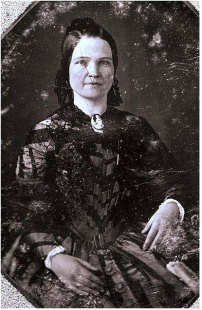
Mary Todd Lincoln Considered April Her "Season of Sadness"
"April is the cruelest month, breeding/Lilacs out of the dead land,
mixing/
Memory and desire, stirring/Dull roots with spring rain."
T.S. Elliott, the Wasteland
Mary Todd Lincoln lost her mother, three of her children, her husband, and several of her brothers. It's not surprising that she used outlets like shopping for solace
April Was the Cruelest and Sometimes the Kindest Month for Mary Todd Lincoln
Mary Todd Lincoln had good reason to appreciate the truth of T.S. Elliot’s lines, for April had practiced continuous cruelties on her spirit and on her family as well as significant kindnesses. After the Civil War started on April 12, 1861, when the Confederate states fired on Fort Sumter, South Carolina. Mary Todd Lincoln's brother and half brothers fought on the Confederate side. Her half brother Samuel Todd was killed at the Battle of Shiloh in 1862, and her half brother Alexander Todd died at Baton Rouge in 1863. Her half sister Emilie Helm’s husband, a Confederate general, was killed at Chickamauga.
By this stage of her life, Mary Lincoln had an intimate acquaintance with death and grief. She had already lost her mother at age eight, and had left one son, Eddie, buried in Illinois. Her passionate, impetuous nature, prompted her to violently fling grief and its symbols away, seeking to escape its hold on her life.
Breeding Lilacs Out of the Dead Land
February could also be included on Mary Todd Lincoln’s calendar as both a kind and cruel month. Abraham Lincoln was born on February 12, 1809. In February, 1850, before they came to Washington, D.C., the Lincolns lost their second son, Eddie to a disease resembling consumption. Eddie died on February 1, 1850.
A week after Eddie's death, Mary and Abraham Lincoln wrote a poem about Eddie which the Illinois State Journal printed. Although some historians question their authorship, it expresses the Lincoln’s grief at losing their son Eddie. It reads in part:
" ..Farewell Sweet Eddie, We bid thee adieu!
Affection’s wail cannot reach thee now
Deep though it be, and true, Bright is the home to him now given
For "of such is the Kingdom of Heaven."
The final line of their poem is on Eddie’s tombstone.
Willie Lincoln, the Lincoln’s third son, was born ten months after Eddie died. Willie died on typhoid fever in the White House on February 20, 1862.
In her book, Behind the Scenes, Thirty Years A Slave Or Four Years In The White House, Elizabeth Keckley wrote that after Willie’s death Mary Lincoln gave away all of Willie’s toys and anything else connected with them. She said that she couldn’t look at Willie’s things without thinking of her poor dead boy, and thinking of him in his white shroud and cold grave was devastating. She also gave away the flowers that people brought for his funeral.
Elizabeth wrote, "I never in my life saw a more peculiarly constituted woman. Search the world over, and you will not find her counterpart."
Mixing Memory and Goats
April also brought joy into the Lincoln’s lives. The Lincoln’s youngest son, Thomas "Tad" Lincoln, was born on April 4, 1853, a birthday that heralded much joy for Abraham and Mary Lincoln. Abraham Lincoln thought his youngest son resembled a wriggling tadpole, and nicknamed him Tad.
Tad and his brother Willie wriggled into constant mischief. While the Lincoln’s lived in the White House President Lincoln allowed Tad and Willie to keep a menagerie of pets including rabbits, turkeys, and horses. The Lincoln boys also had two pet goats, Nanny and Nanko who sometimes rode in the Presidential carriage with President Lincoln
Nanny and Nanko were Tad’s favorite pets and sometimes they slept with him. One time Tad scattered a group of proper Bostonian White House visitors in the East Room when he drove one of the goats pulling a chair through the room. He shouted, "Get out of the way there!" and managed to disperse the group.
In her book, Elizabeth Keckley wrote that Nanny and Nanko knew Lincoln’s voice and when he called them they would come running to his side. On warm, sunny days President Lincoln and Tad would play with the goats in the yard for an hour at a time.
According to Elizabeth Keckley, President and Mrs. Lincoln disagreed about the goats. Elizabeth wrote that Mrs. Lincoln couldn’t understand how her husband could be so fond of Nanny and Nanko. She recalled one Saturday afternoon when she came to the White House to dress Mrs. Lincoln. She had nearly finished when the President came into the room, and walked to the window. He looked down into the courtyard and asked Elizabeth if she liked pets. He laughed at the antics of the goats. Mrs. Lincoln called out, "Come, Elizabeth, if I get ready to go down this evening I must finish dressing myself, or you must stop staring at those silly goats!"
A telegram that Mary Lincoln wrote to her husband from New York, dated April 28, 1864, softens Elizabeth Beckley’s image of stern pet disapproval. Mary announced her arrival, inquired after her husband’s heath, and asked for a check for $50.00. Then she asked, "Tad says are the goats well?"
Stirring Dull Roots with Spring Rain
The February-April thread continued its pattern through the Lincoln family. John Wilkes Booth assassinated Abraham Lincoln on April 14, 1865. After President Lincoln died, his grieving wife gave Nanny and Namco to Miss Blair, one of her Washington friends. After President Abraham Lincoln’s assassination, Robert Lincoln and his mother and brother Tad moved to Chicago and he finished his law studies at what was then the University of Chicago. On February 25, 1867, Robert Lincoln was admitted to the bar.
The next decade held more sorrow for Mary. Her youngest son, Tad, died of tuberculosis at age 18, in 1871. In 1875, alarmed by her erratic behavior, her surviving son, Robert, had Mary declared insane and involuntarily committed to an asylum called Bellevue Place in Batavia, Illinois. Mary fought hard for her freedom and with the help of her friends Myra and James Bradwell, she won her release.
Mary Lincoln spent the years 1876-1878 in Europe. Her European letters are rational and contain details of her travels and inquiries about friends and happenings at home. In a springtime letter from Sorrento, Italy, in April 1878, she called April "her season of sadness." She wrote that the sadness cut more deeply because she was returning to places that she had visited in the 1860s during her mourning for her husband.
She recalled that "My beloved husband and I for hours would sit down and anticipate the pleasant time, we would have in quietly visiting places and halting in such spots as this, when his official labors were ended. God works in such a mysterious way and we are left to bow to His will. But to some of us, resignation will never come. But perhaps for the tears shed here, compensation will succeed the grief of the present time."
Historians still debate and diagnose Mary Todd Lincoln’s sanity and stability. Peering through the lens of history with its distortions of time and dimensional accounts, pronouncing Mary Todd sane or insane with any degree of certainly is impossible. It also is impossible to determine whether or not she liked or merely tolerated Nanny and Nanco for her son and husband’s sake.
Recognizing Mary Todd Lincoln as a woman scarred by "April, the cruelest month", but continuing to be resurrected by spring rain is a lesson in history and in human nature.
References
Baker, Jean Harvey. Mary Todd Lincoln: A Biography. W.W. Norton, 2008.
Clinton, Catherine. Mrs. Lincoln: A Life. Harpers, First Edition, 2009.
Donald, David Herbert. Lincoln. New York: Simon and Schuster, 1995.
Keckley, Elizabeth. Behind the Scenes, Or Thirty Years a Slave, and Four Years in the White House. University of Illinois Press, 2002.
Neely, Jr., Mark. The Abraham Lincoln Encyclopedia. McGraw Hill book Company, 1982.
Turner, Justin and Turner, Linda Levitt. Mary Todd Lincoln: Her Life and Letters. Fromm International, 1987.
mixing/
Memory and desire, stirring/Dull roots with spring rain."
T.S. Elliott, the Wasteland
Mary Todd Lincoln lost her mother, three of her children, her husband, and several of her brothers. It's not surprising that she used outlets like shopping for solace
April Was the Cruelest and Sometimes the Kindest Month for Mary Todd Lincoln
Mary Todd Lincoln had good reason to appreciate the truth of T.S. Elliot’s lines, for April had practiced continuous cruelties on her spirit and on her family as well as significant kindnesses. After the Civil War started on April 12, 1861, when the Confederate states fired on Fort Sumter, South Carolina. Mary Todd Lincoln's brother and half brothers fought on the Confederate side. Her half brother Samuel Todd was killed at the Battle of Shiloh in 1862, and her half brother Alexander Todd died at Baton Rouge in 1863. Her half sister Emilie Helm’s husband, a Confederate general, was killed at Chickamauga.
By this stage of her life, Mary Lincoln had an intimate acquaintance with death and grief. She had already lost her mother at age eight, and had left one son, Eddie, buried in Illinois. Her passionate, impetuous nature, prompted her to violently fling grief and its symbols away, seeking to escape its hold on her life.
Breeding Lilacs Out of the Dead Land
February could also be included on Mary Todd Lincoln’s calendar as both a kind and cruel month. Abraham Lincoln was born on February 12, 1809. In February, 1850, before they came to Washington, D.C., the Lincolns lost their second son, Eddie to a disease resembling consumption. Eddie died on February 1, 1850.
A week after Eddie's death, Mary and Abraham Lincoln wrote a poem about Eddie which the Illinois State Journal printed. Although some historians question their authorship, it expresses the Lincoln’s grief at losing their son Eddie. It reads in part:
" ..Farewell Sweet Eddie, We bid thee adieu!
Affection’s wail cannot reach thee now
Deep though it be, and true, Bright is the home to him now given
For "of such is the Kingdom of Heaven."
The final line of their poem is on Eddie’s tombstone.
Willie Lincoln, the Lincoln’s third son, was born ten months after Eddie died. Willie died on typhoid fever in the White House on February 20, 1862.
In her book, Behind the Scenes, Thirty Years A Slave Or Four Years In The White House, Elizabeth Keckley wrote that after Willie’s death Mary Lincoln gave away all of Willie’s toys and anything else connected with them. She said that she couldn’t look at Willie’s things without thinking of her poor dead boy, and thinking of him in his white shroud and cold grave was devastating. She also gave away the flowers that people brought for his funeral.
Elizabeth wrote, "I never in my life saw a more peculiarly constituted woman. Search the world over, and you will not find her counterpart."
Mixing Memory and Goats
April also brought joy into the Lincoln’s lives. The Lincoln’s youngest son, Thomas "Tad" Lincoln, was born on April 4, 1853, a birthday that heralded much joy for Abraham and Mary Lincoln. Abraham Lincoln thought his youngest son resembled a wriggling tadpole, and nicknamed him Tad.
Tad and his brother Willie wriggled into constant mischief. While the Lincoln’s lived in the White House President Lincoln allowed Tad and Willie to keep a menagerie of pets including rabbits, turkeys, and horses. The Lincoln boys also had two pet goats, Nanny and Nanko who sometimes rode in the Presidential carriage with President Lincoln
Nanny and Nanko were Tad’s favorite pets and sometimes they slept with him. One time Tad scattered a group of proper Bostonian White House visitors in the East Room when he drove one of the goats pulling a chair through the room. He shouted, "Get out of the way there!" and managed to disperse the group.
In her book, Elizabeth Keckley wrote that Nanny and Nanko knew Lincoln’s voice and when he called them they would come running to his side. On warm, sunny days President Lincoln and Tad would play with the goats in the yard for an hour at a time.
According to Elizabeth Keckley, President and Mrs. Lincoln disagreed about the goats. Elizabeth wrote that Mrs. Lincoln couldn’t understand how her husband could be so fond of Nanny and Nanko. She recalled one Saturday afternoon when she came to the White House to dress Mrs. Lincoln. She had nearly finished when the President came into the room, and walked to the window. He looked down into the courtyard and asked Elizabeth if she liked pets. He laughed at the antics of the goats. Mrs. Lincoln called out, "Come, Elizabeth, if I get ready to go down this evening I must finish dressing myself, or you must stop staring at those silly goats!"
A telegram that Mary Lincoln wrote to her husband from New York, dated April 28, 1864, softens Elizabeth Beckley’s image of stern pet disapproval. Mary announced her arrival, inquired after her husband’s heath, and asked for a check for $50.00. Then she asked, "Tad says are the goats well?"
Stirring Dull Roots with Spring Rain
The February-April thread continued its pattern through the Lincoln family. John Wilkes Booth assassinated Abraham Lincoln on April 14, 1865. After President Lincoln died, his grieving wife gave Nanny and Namco to Miss Blair, one of her Washington friends. After President Abraham Lincoln’s assassination, Robert Lincoln and his mother and brother Tad moved to Chicago and he finished his law studies at what was then the University of Chicago. On February 25, 1867, Robert Lincoln was admitted to the bar.
The next decade held more sorrow for Mary. Her youngest son, Tad, died of tuberculosis at age 18, in 1871. In 1875, alarmed by her erratic behavior, her surviving son, Robert, had Mary declared insane and involuntarily committed to an asylum called Bellevue Place in Batavia, Illinois. Mary fought hard for her freedom and with the help of her friends Myra and James Bradwell, she won her release.
Mary Lincoln spent the years 1876-1878 in Europe. Her European letters are rational and contain details of her travels and inquiries about friends and happenings at home. In a springtime letter from Sorrento, Italy, in April 1878, she called April "her season of sadness." She wrote that the sadness cut more deeply because she was returning to places that she had visited in the 1860s during her mourning for her husband.
She recalled that "My beloved husband and I for hours would sit down and anticipate the pleasant time, we would have in quietly visiting places and halting in such spots as this, when his official labors were ended. God works in such a mysterious way and we are left to bow to His will. But to some of us, resignation will never come. But perhaps for the tears shed here, compensation will succeed the grief of the present time."
Historians still debate and diagnose Mary Todd Lincoln’s sanity and stability. Peering through the lens of history with its distortions of time and dimensional accounts, pronouncing Mary Todd sane or insane with any degree of certainly is impossible. It also is impossible to determine whether or not she liked or merely tolerated Nanny and Nanco for her son and husband’s sake.
Recognizing Mary Todd Lincoln as a woman scarred by "April, the cruelest month", but continuing to be resurrected by spring rain is a lesson in history and in human nature.
References
Baker, Jean Harvey. Mary Todd Lincoln: A Biography. W.W. Norton, 2008.
Clinton, Catherine. Mrs. Lincoln: A Life. Harpers, First Edition, 2009.
Donald, David Herbert. Lincoln. New York: Simon and Schuster, 1995.
Keckley, Elizabeth. Behind the Scenes, Or Thirty Years a Slave, and Four Years in the White House. University of Illinois Press, 2002.
Neely, Jr., Mark. The Abraham Lincoln Encyclopedia. McGraw Hill book Company, 1982.
Turner, Justin and Turner, Linda Levitt. Mary Todd Lincoln: Her Life and Letters. Fromm International, 1987.
